Vulkan API Mobile: Graphics API for Mobile Gaming Performance
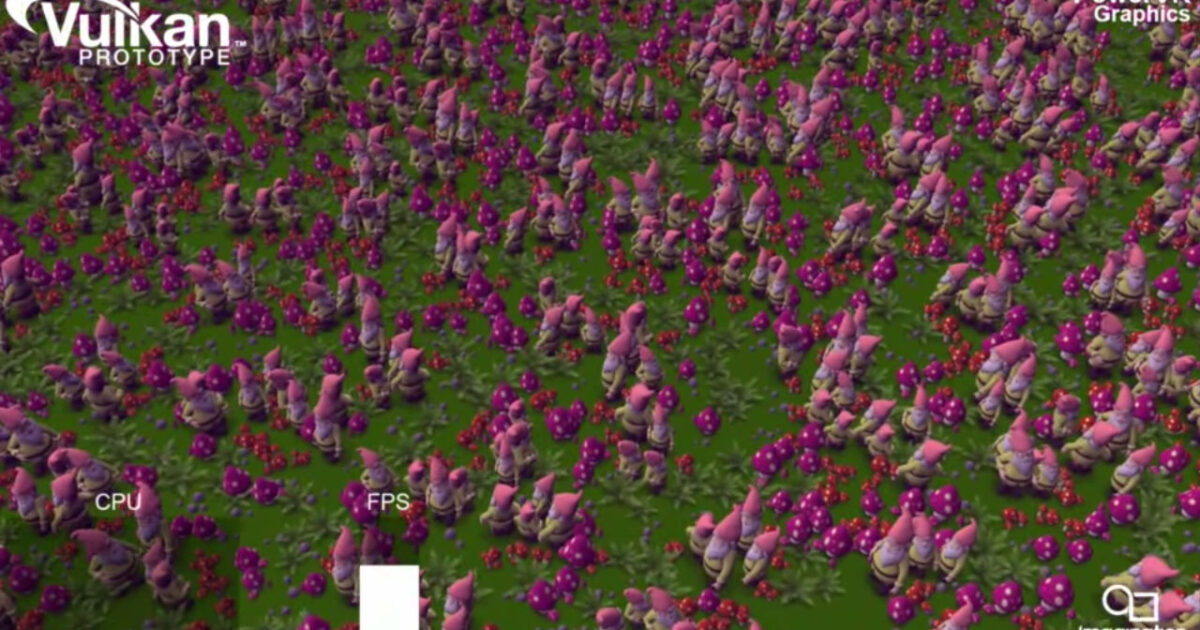
Imagine holding the power of a high-end gaming PC right in the palm of your hand. What if you could experience console-quality graphics and performance on your mobile device? This isn't just a dream; it's becoming a reality thanks to advancements in mobile graphics technology.
Developing compelling mobile games presents unique hurdles. Game developers often struggle to balance visual fidelity with battery life, and performance can be inconsistent across different devices. Maximizing graphical capabilities without draining resources requires careful optimization and the right tools.
This blog post will delve into the world of Vulkan API on mobile platforms, exploring how it empowers developers to create stunning and performant mobile games. We'll uncover the benefits of Vulkan, understand its architecture, and discover how it's changing the landscape of mobile gaming.
In essence, Vulkan API is revolutionizing mobile gaming by providing developers with unprecedented control over the GPU, resulting in improved performance, reduced power consumption, and visually richer gaming experiences. Keywords explored will include mobile gaming, graphics API, performance optimization, Vulkan architecture, and power efficiency.
Unlocking Mobile Potential with Vulkan
My first experience with Vulkan on mobile was a revelation. I remember struggling to optimize a complex particle system in a mobile game I was developing. Frame rates were abysmal, and the game was virtually unplayable on mid-range devices. After switching to Vulkan, the improvement was dramatic. The particle system ran smoothly, and the game felt significantly more responsive. This was largely due to Vulkan's lower-level access to the GPU, enabling more efficient resource management and reducing CPU overhead. Vulkan empowers developers to optimize performance by directly controlling GPU operations, such as memory allocation and command buffer execution. This level of control results in lower draw call overhead and reduced CPU bottlenecks, enabling more complex and visually appealing games on mobile platforms. This is crucial, as mobile GPUs are often limited in processing power compared to their desktop counterparts. Vulkan allows game engines to take full advantage of the available hardware, unlocking the potential for console-quality graphics on mobile devices. Furthermore, Vulkan's multi-threading capabilities allow for parallel processing of graphics commands, further enhancing performance and scalability. The result is smoother gameplay, higher frame rates, and a richer visual experience for mobile gamers.
What is Vulkan API for Mobile?
Vulkan API is a low-overhead, cross-platform 3D graphics and compute API. Think of it as a direct line of communication between your game and the graphics processing unit (GPU). Unlike older APIs like Open GL ES, Vulkan provides developers with explicit control over how the GPU executes commands. This means developers can optimize resource usage, minimize CPU overhead, and ultimately squeeze more performance out of mobile hardware. Vulkan provides explicit control over GPU operations, allowing developers to optimize resource utilization and minimize CPU overhead. This explicit control contrasts sharply with older APIs like Open GL ES, which often involve implicit operations and driver-level optimizations that can introduce unpredictable performance bottlenecks. With Vulkan, developers can precisely manage memory allocation, command buffer execution, and synchronization primitives, enabling them to create highly optimized rendering pipelines. Furthermore, Vulkan's multi-threading capabilities allow for parallel processing of graphics commands, taking full advantage of modern multi-core mobile processors. This parallel processing reduces CPU bottlenecks and improves overall performance, particularly in complex scenes with numerous objects and effects. The benefits of Vulkan extend beyond performance, it also promotes better portability across different mobile platforms, as it provides a standardized API for accessing GPU functionality. This standardization simplifies the development process and reduces the need for platform-specific code, enabling developers to reach a wider audience with their games.
History and Myth of Vulkan API Mobile
The origins of Vulkan can be traced back to AMD's Mantle API. AMD designed Mantle to provide lower-level access to GPUs, aiming to improve performance in PC games. Recognizing the potential of this approach, the Khronos Group, a consortium of industry leaders, used Mantle as a foundation for developing Vulkan. The goal was to create a cross-platform API that would be open, royalty-free, and suitable for a wide range of devices, including mobile. A common myth surrounding Vulkan is that it's too complex for smaller development teams. While it's true that Vulkan requires a deeper understanding of graphics programming, the benefits it offers in terms of performance and control are significant. Many game engines and libraries are now providing higher-level abstractions that simplify Vulkan development, making it more accessible to a wider range of developers. Vulkan emerged from the need for a more efficient and modern graphics API that could overcome the limitations of older APIs like Open GL. The Khronos Group designed Vulkan to provide explicit control over GPU operations, allowing developers to optimize resource utilization and minimize CPU overhead. The adoption of Vulkan has been gradual but steady, with major game engines and developers increasingly embracing the API to unlock the full potential of mobile hardware. The future of Vulkan looks promising, as it continues to evolve and adapt to the changing landscape of mobile gaming. As mobile devices become more powerful, Vulkan will play an increasingly important role in delivering high-quality graphics and immersive gaming experiences.
Hidden Secret of Vulkan API Mobile
One of the lesser-known secrets of Vulkan lies in its ability to reduce power consumption. By providing finer-grained control over the GPU, developers can optimize rendering pipelines to minimize unnecessary operations and reduce the overall energy footprint of their games. This is particularly important for mobile devices, where battery life is a crucial consideration. Vulkan enables developers to optimize rendering pipelines by minimizing unnecessary operations and reducing the overall energy footprint of their games. This optimization is achieved through explicit control over GPU resources, such as memory allocation, command buffer execution, and synchronization primitives. By carefully managing these resources, developers can reduce the power consumption of their games without sacrificing visual quality or performance. Furthermore, Vulkan's multi-threading capabilities allow for parallel processing of graphics commands, which can further reduce power consumption by distributing the workload across multiple CPU cores. This parallel processing reduces the CPU's overall workload and prevents it from becoming a bottleneck, resulting in improved power efficiency. Another hidden secret of Vulkan is its extensibility. The API is designed to be extensible, allowing hardware vendors to add custom extensions that expose unique features of their GPUs. This extensibility enables developers to take advantage of cutting-edge hardware features and create highly optimized games that push the boundaries of mobile graphics technology. The combination of power efficiency, extensibility, and explicit control makes Vulkan a powerful tool for mobile game developers.
Recommendation of Vulkan API Mobile
If you're serious about mobile game development, I highly recommend investing time in learning Vulkan API. While it has a steeper learning curve compared to Open GL ES, the performance gains and control it offers are well worth the effort. Start by exploring the official Vulkan documentation and sample code. Experiment with simple rendering techniques and gradually work your way up to more complex scenarios. Consider using a game engine that provides Vulkan support, as this can significantly simplify the development process. Embracing Vulkan will open up new possibilities for creating stunning and performant mobile games that rival console experiences. If you're considering adopting Vulkan, it's essential to carefully evaluate the specific requirements of your project. Vulkan is best suited for games that demand high performance and require fine-grained control over the rendering pipeline. For simpler games, Open GL ES may still be a viable option. However, for complex games with demanding graphics requirements, Vulkan offers a significant advantage. Before diving into Vulkan development, it's also crucial to familiarize yourself with the underlying concepts of graphics programming. A solid understanding of topics such as shaders, textures, and rendering pipelines is essential for effectively utilizing Vulkan's capabilities. Numerous online resources, tutorials, and courses are available to help you learn these concepts. In addition to learning the API itself, it's also important to stay up-to-date with the latest Vulkan extensions and best practices. The Vulkan ecosystem is constantly evolving, with new features and optimizations being introduced regularly. By staying informed, you can ensure that your games take full advantage of the latest advancements in mobile graphics technology.
Diving Deeper: Vulkan Architecture
Understanding the architecture of Vulkan is crucial for effective development. Vulkan operates on a command-based model, where the CPU prepares commands that are then executed by the GPU. These commands are organized into command buffers, which are submitted to a queue for execution. Vulkan also features a layered architecture, allowing developers to insert validation and debugging layers into the rendering pipeline. These layers can help identify errors, optimize performance, and ensure that the game adheres to the Vulkan specification. Vulkan's command-based architecture provides developers with fine-grained control over GPU operations. Instead of relying on implicit driver-level optimizations, developers explicitly define the sequence of commands that the GPU should execute. This explicit control enables developers to optimize resource utilization and minimize CPU overhead. The command buffers in Vulkan are pre-recorded, meaning that they can be prepared in advance and submitted to the GPU for execution. This pre-recording reduces the CPU's workload during the rendering loop and improves overall performance. Vulkan's layered architecture allows developers to insert validation and debugging layers into the rendering pipeline. These layers can perform various checks, such as validating API usage, detecting memory leaks, and profiling performance bottlenecks. The validation layers help ensure that the game adheres to the Vulkan specification and avoids common errors. The debugging layers provide tools for inspecting the state of the GPU and identifying performance issues. By utilizing these layers, developers can significantly improve the quality and stability of their games.
Tips for Optimizing Vulkan Mobile Games
Optimizing Vulkan mobile games requires a different mindset compared to older APIs. Focus on minimizing draw calls by using techniques like instancing and batching. Leverage asynchronous compute shaders to offload non-graphics tasks from the CPU. Take advantage of Vulkan's explicit memory management to reduce memory allocations and deallocations during runtime. Profiling your game with tools like Render Doc is essential for identifying performance bottlenecks. Optimizing Vulkan mobile games involves a combination of techniques aimed at reducing CPU overhead, minimizing GPU workload, and optimizing memory utilization. Minimizing draw calls is crucial, as each draw call incurs a significant overhead on the CPU. Techniques like instancing and batching allow developers to render multiple objects with a single draw call, reducing the overall CPU workload. Leveraging asynchronous compute shaders can offload non-graphics tasks from the CPU to the GPU. This offloading frees up the CPU to focus on other tasks, such as game logic and physics, improving overall performance. Vulkan's explicit memory management provides developers with fine-grained control over memory allocation and deallocation. By carefully managing memory resources, developers can reduce memory fragmentation and improve memory access performance. Profiling your game with tools like Render Doc is essential for identifying performance bottlenecks. Render Doc allows developers to capture and analyze individual frames, providing insights into GPU usage, shader performance, and memory allocation. By identifying these bottlenecks, developers can optimize their code and improve the overall performance of their games. In addition to these techniques, it's also important to optimize shaders, textures, and other assets to reduce their size and complexity. Smaller assets consume less memory and require less processing power, resulting in improved performance and battery life.
Understanding Descriptors and Pipelines
Descriptors in Vulkan are essentially pointers to resources used by shaders, such as textures, buffers, and samplers. They are grouped into descriptor sets, which are bound to a pipeline before rendering. Pipelines in Vulkan define the entire rendering process, from vertex input to fragment output. Creating pipelines can be complex, but it allows for precise control over the rendering pipeline, enabling significant performance optimizations. Descriptors and pipelines are fundamental concepts in Vulkan that control how shaders access resources and how the rendering process is executed. Descriptors provide shaders with access to resources such as textures, buffers, and samplers. They are grouped into descriptor sets, which are bound to a pipeline before rendering. The efficient management of descriptors is crucial for achieving optimal performance. Pipelines in Vulkan define the entire rendering process, from vertex input to fragment output. Creating pipelines involves specifying various parameters, such as vertex formats, shaders, rasterization settings, and blend modes. While creating pipelines can be complex, it allows for precise control over the rendering pipeline, enabling significant performance optimizations. Vulkan's explicit pipeline management contrasts sharply with older APIs like Open GL ES, which often involve implicit pipeline state changes that can introduce unpredictable performance bottlenecks. By carefully managing descriptors and pipelines, developers can optimize their rendering pipelines and achieve significant performance gains. Techniques such as pipeline caching can further improve performance by reducing the time it takes to create pipelines. The combination of descriptors and pipelines provides developers with the flexibility and control needed to create high-performance mobile games.
Fun Facts About Vulkan API Mobile
Did you know that Vulkan is named after a volcano? The name reflects the API's low-level nature and its ability to "unleash" the full power of the GPU. Vulkan is also used in a wide range of applications beyond gaming, including virtual reality, augmented reality, and scientific visualization. The open-source nature of Vulkan allows for community contributions and continuous improvement, ensuring that the API remains at the forefront of graphics technology. Vulkan's name is inspired by volcanoes, symbolizing the raw power and direct access to the hardware that the API provides. This naming convention reflects Vulkan's philosophy of empowering developers with fine-grained control over the GPU. Vulkan is not limited to gaming applications, it is also used in a wide range of other fields, including virtual reality, augmented reality, scientific visualization, and machine learning. Vulkan's versatility makes it a valuable tool for developers working on diverse projects. The open-source nature of Vulkan allows for community contributions and continuous improvement. Developers from around the world contribute to the Vulkan ecosystem, providing feedback, bug fixes, and new features. This collaborative approach ensures that the API remains at the forefront of graphics technology. Vulkan is constantly evolving, with new extensions and features being added regularly. These extensions provide developers with access to cutting-edge hardware capabilities and enable them to create even more impressive visual experiences. The combination of power, versatility, and community support makes Vulkan a leading graphics API for mobile and beyond.
How to Start with Vulkan API Mobile
Starting with Vulkan API mobile can seem daunting, but there are several resources available to help you get started. The official Vulkan documentation is an excellent source of information, providing detailed explanations of the API's concepts and functions. Numerous online tutorials and courses offer step-by-step guidance on Vulkan development. Consider using a game engine that provides Vulkan support, as this can significantly simplify the development process. Experiment with sample code and gradually build up your understanding of the API. Starting with Vulkan API mobile requires a systematic approach that combines theoretical learning with practical experimentation. Begin by studying the official Vulkan documentation, which provides a comprehensive overview of the API's concepts, functions, and features. Supplement your reading with online tutorials and courses that offer step-by-step guidance on Vulkan development. These resources can help you understand the API's concepts in a more practical context. Consider using a game engine that provides Vulkan support, such as Unity or Unreal Engine. These engines provide higher-level abstractions that simplify Vulkan development and make it easier to create games. Experiment with sample code and gradually build up your understanding of the API. Start with simple rendering techniques and gradually work your way up to more complex scenarios. Don't be afraid to ask for help from the Vulkan community. Numerous online forums and communities are dedicated to Vulkan development, where you can ask questions, share your experiences, and learn from others. With dedication and perseverance, you can master Vulkan API mobile and unlock the full potential of mobile graphics technology.
What if Vulkan API Mobile did not exist?
Without Vulkan API, mobile game development would likely be constrained by the limitations of older APIs like Open GL ES. Performance would be lower, battery consumption would be higher, and developers would have less control over the GPU. This would limit the visual fidelity and complexity of mobile games, preventing them from reaching the same level of quality as console games. The absence of Vulkan API would have a significant impact on the mobile gaming landscape. Without Vulkan's low-level access to the GPU, developers would be constrained by the limitations of older APIs like Open GL ES. Performance would be lower, battery consumption would be higher, and developers would have less control over the rendering pipeline. This would limit the visual fidelity and complexity of mobile games, preventing them from reaching the same level of quality as console games. Mobile game developers would have to rely on driver-level optimizations to improve performance, which can be unpredictable and inconsistent across different devices. This lack of control would make it difficult to create games that run smoothly on a wide range of mobile devices. Furthermore, the absence of Vulkan's multi-threading capabilities would limit the CPU's ability to process graphics commands in parallel. This would result in CPU bottlenecks and reduced overall performance, particularly in complex scenes with numerous objects and effects. The absence of Vulkan would also stifle innovation in mobile graphics technology. Without a modern and efficient graphics API, developers would be less likely to experiment with new rendering techniques and push the boundaries of mobile graphics. Vulkan has played a crucial role in enabling the creation of visually stunning and performant mobile games, and its absence would have a significant negative impact on the mobile gaming industry.
Listicle: Top 5 Benefits of Vulkan API Mobile
Here are the top 5 benefits of using Vulkan API for mobile game development: 1. Improved Performance: Vulkan's low-level access to the GPU results in significantly improved performance compared to older APIs.
2. Reduced Power Consumption: Vulkan's efficient resource management reduces power consumption, extending battery life on mobile devices.
3. Explicit Control: Vulkan provides developers with explicit control over the GPU, enabling fine-grained optimization.
4. Multi-Threading: Vulkan's multi-threading capabilities allow for parallel processing of graphics commands, improving performance on multi-core processors.
5. Cross-Platform: Vulkan is a cross-platform API, making it easier to develop games that run on a variety of mobile devices. Vulkan offers a wide range of benefits for mobile game developers, and here are the top 5 most significant:
1. Improved Performance: Vulkan's low-level access to the GPU allows developers to bypass driver-level overhead and directly control hardware resources, resulting in significantly improved performance compared to older APIs like Open GL ES.
2. Reduced Power Consumption: Vulkan's efficient resource management and reduced CPU overhead lead to lower power consumption, extending battery life on mobile devices. This is crucial for mobile gaming, where battery life is a major concern.
3. Explicit Control: Vulkan provides developers with explicit control over the GPU, enabling fine-grained optimization of the rendering pipeline. This control allows developers to tailor their games to the specific capabilities of the target hardware, maximizing performance and visual quality.
4. Multi-Threading: Vulkan's multi-threading capabilities allow for parallel processing of graphics commands, improving performance on multi-core processors. This parallel processing reduces CPU bottlenecks and enables more complex and visually appealing games on mobile platforms.
5. Cross-Platform: Vulkan is a cross-platform API, making it easier to develop games that run on a variety of mobile devices. This cross-platform compatibility reduces development costs and allows developers to reach a wider audience with their games. These benefits make Vulkan a powerful tool for mobile game developers looking to create high-performance and visually stunning games.
Question and Answer
Q: Is Vulkan difficult to learn?
A: Vulkan has a steeper learning curve compared to older APIs, but the performance benefits are worth the effort. Start with the official documentation and sample code. Q: Is Vulkan supported on all mobile devices?
A: Vulkan support depends on the device's GPU and operating system. Most modern Android devices support Vulkan. Q: Can I use Vulkan with existing game engines?
A: Yes, many popular game engines like Unity and Unreal Engine provide Vulkan support. Q: Does Vulkan improve battery life?
A: Yes, Vulkan's efficient resource management can reduce power consumption and improve battery life on mobile devices.
Conclusion of Vulkan API Mobile
Vulkan API is a game-changer for mobile gaming. By providing developers with low-level access to the GPU, it enables them to create stunning and performant mobile games that rival console experiences. While it requires a deeper understanding of graphics programming, the benefits it offers in terms of performance, power efficiency, and control are undeniable. As mobile devices become more powerful, Vulkan will continue to play an increasingly important role in shaping the future of mobile gaming. Embrace Vulkan, and unlock the full potential of your mobile games.
Post a Comment